
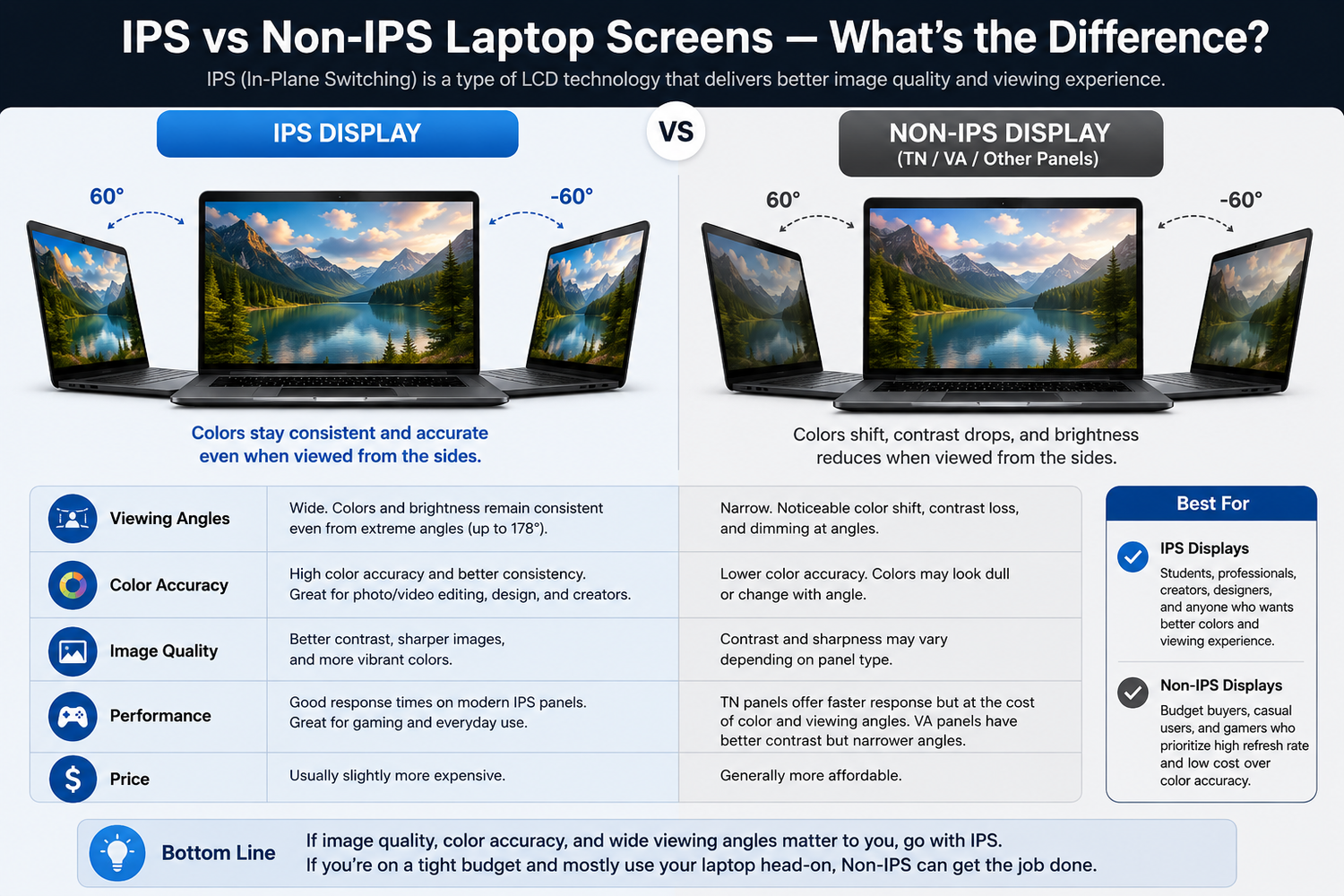
IPS vs Non-IPS Laptop Screens — What's the Difference?
When replacing your laptop screen, one of the most important decisions is whether to choose an IPS or Non-IPS panel.
What is an IPS Screen?
IPS (In-Plane Switching) is a type of LCD panel technology known for its superior colour accuracy and wide viewing angles.
Advantages of IPS Screens
- Wide viewing angles — colours remain consistent even when viewed from the side
- Better colour accuracy — ideal for photo editing, graphic design and video work
- Richer colours — covering a wider colour gamut
- More comfortable for long use — less eye strain
What is a Non-IPS Screen?
Non-IPS laptop screens typically use TN (Twisted Nematic) panel technology.
Advantages of Non-IPS (TN) Screens
- Lower cost
- Fast response times — traditionally better for fast-paced gaming
- Lower power consumption
Which Should You Choose?
- Choose IPS if you use your laptop for work, creative tasks, or watching films
- Choose Non-IPS if you're on a tight budget and use your laptop for basic tasks
Browse our full range at technologyvs.co.uk





Leave a comment
This site is protected by hCaptcha and the hCaptcha Privacy Policy and Terms of Service apply.